Buy startup.co.at ?
We are moving the project
startup.co.at .
Are you interested in purchasing the domain
startup.co.at ?
domain@kv-gmbh.de · 0541-91531010
Buy startup.co.at ?
What are oxygen atoms and carbon atoms?
Oxygen atoms are the building blocks of the element oxygen, which is essential for life and makes up a large portion of the Earth's atmosphere. Oxygen atoms have 8 protons and typically 8 neutrons, giving them a total atomic mass of 16. They are known for their ability to form strong bonds with other elements, making them crucial for the formation of molecules such as water and carbon dioxide. Carbon atoms are the building blocks of the element carbon, which is a fundamental component of all known life on Earth. Carbon atoms have 6 protons and typically 6 neutrons, giving them a total atomic mass of 12. They are known for their ability to form long chains and complex structures, making them essential for the formation of organic molecules such as proteins, carbohydrates, and DNA. **
Will adding protons to atoms create different atoms?
No, adding protons to atoms will not create different atoms. The number of protons in an atom determines its identity as a specific element. Adding protons to an atom will change its identity and create a different element. However, adding protons to an atom can create a different isotope of the same element, which will have a different atomic mass but the same chemical properties. **

Similar search terms for Atoms
Top-Angebote
Products related to Atoms:
-
HARPERCOLLINS Creative Confidence by Tom & David Kelley – Unleashing Your Creative Potential & Innovation MindsetA powerful and inspiring book from the founders of IDEO, the award-winning design firm, on unleashing the creativity that lies within each and every one of us. Too often, companies and individuals assume that creativity and innovation are the domain of the ‘creative types’. But two of the foremost experts in innovation, design and creativity on the planet show us that each and every one of us is creative. In an entertaining and inspiring narrative that draws on countless stories from their work at IDEO, and with many of the world's top companies and design firms, David and Tom Kelley identify the principles and strategies that will allow us to tap into our creative potential in our work lives, and in our personal lives, allow us to think outside the box in terms of how we approach and solve problems. ‘Creative Confidence’ is a book that will help each of us be more productive and successful in our lives and in our careers.4,95 £*Shipping: 1,99 £Secure redirect to the provider
-
Innovation: Fourth Edition Board Game - 2-4 Players - New Edition with Age 11 CardsStrategic card game for 2 to 4 players. Build a civilization through ideas, inventions, and cultural advances. Includes updated artwork, streamlined rules, and new expansion The Unseen.17,59 £*Shipping: 3,95 £Secure redirect to the provider
-
Travelite Venture Line Travel backpack beigeDesigned for dynamic travel, this Travelite Venture Line backpack combines functionality with urban style. Crafted from coated nylon with a synthetic lining, it offers durability and a sleek finish. The bag features breathable padded backpack straps with a sternum strap and compression strap for added stability and comfort. It closes securely with a two-way zipper and includes a detachable, padded, and adjustable shoulder strap for versatile carrying. Organise your essentials easily with one main compartment, front and side zip pockets, and two slip pockets. With two handles and a retractable backpack strap, it’s perfect for men and women on the move, offering ample space for everyday adventures.79,00 £*Shipping: 0,00 £Secure redirect to the provider


-
Why are some atoms larger than other atoms?
Some atoms are larger than others because they have more protons, neutrons, and electrons, which increases their atomic mass and size. The number of electron shells and the distance of the outermost electrons from the nucleus also contribute to the size of an atom. Additionally, the arrangement of electrons in the electron shells can affect the size of an atom. Overall, the size of an atom is determined by a combination of its atomic number, electron configuration, and atomic mass. **
-
Do argon atoms form when chlorine atoms gain electrons?
No, argon atoms do not form when chlorine atoms gain electrons. When chlorine atoms gain an electron, they become chloride ions with a negative charge. Argon is a noble gas and already has a full outer electron shell, so it does not need to gain or lose electrons to achieve stability. **
-
Are atoms universes?
No, atoms are not universes. Atoms are the basic building blocks of matter, consisting of a nucleus of protons and neutrons surrounded by a cloud of electrons. Universes, on the other hand, are vast and complex systems that contain galaxies, stars, planets, and other celestial bodies. While both atoms and universes are part of the natural world, they exist at vastly different scales and levels of complexity. **
-
Can atoms explode?
Atoms themselves cannot explode, as they are the building blocks of matter and are stable in their natural state. However, when atoms undergo a nuclear reaction, such as nuclear fission or fusion, a large amount of energy is released in the form of an explosion. This is what happens in nuclear bombs or nuclear power plants. So, while atoms themselves cannot explode, the reactions they undergo can result in explosive energy release. **


What is the difference between metal atoms and magnesium atoms?
Metal atoms refer to a broad category of elements that exhibit metallic properties, such as being good conductors of heat and electricity. Magnesium atoms, on the other hand, specifically refer to atoms of the element magnesium, which is a metal known for its light weight and high strength-to-weight ratio. While magnesium atoms are a subset of metal atoms, they have unique properties and characteristics that distinguish them from other metals. **
Can all atoms be split or only atoms that are radioactive?
Only atoms that are radioactive can be split through a process called nuclear fission. This process involves splitting the nucleus of an atom into smaller parts, releasing a large amount of energy in the process. Not all atoms are radioactive, so only those specific atoms can undergo nuclear fission. **
Top-Angebote
Products related to Atoms:
-
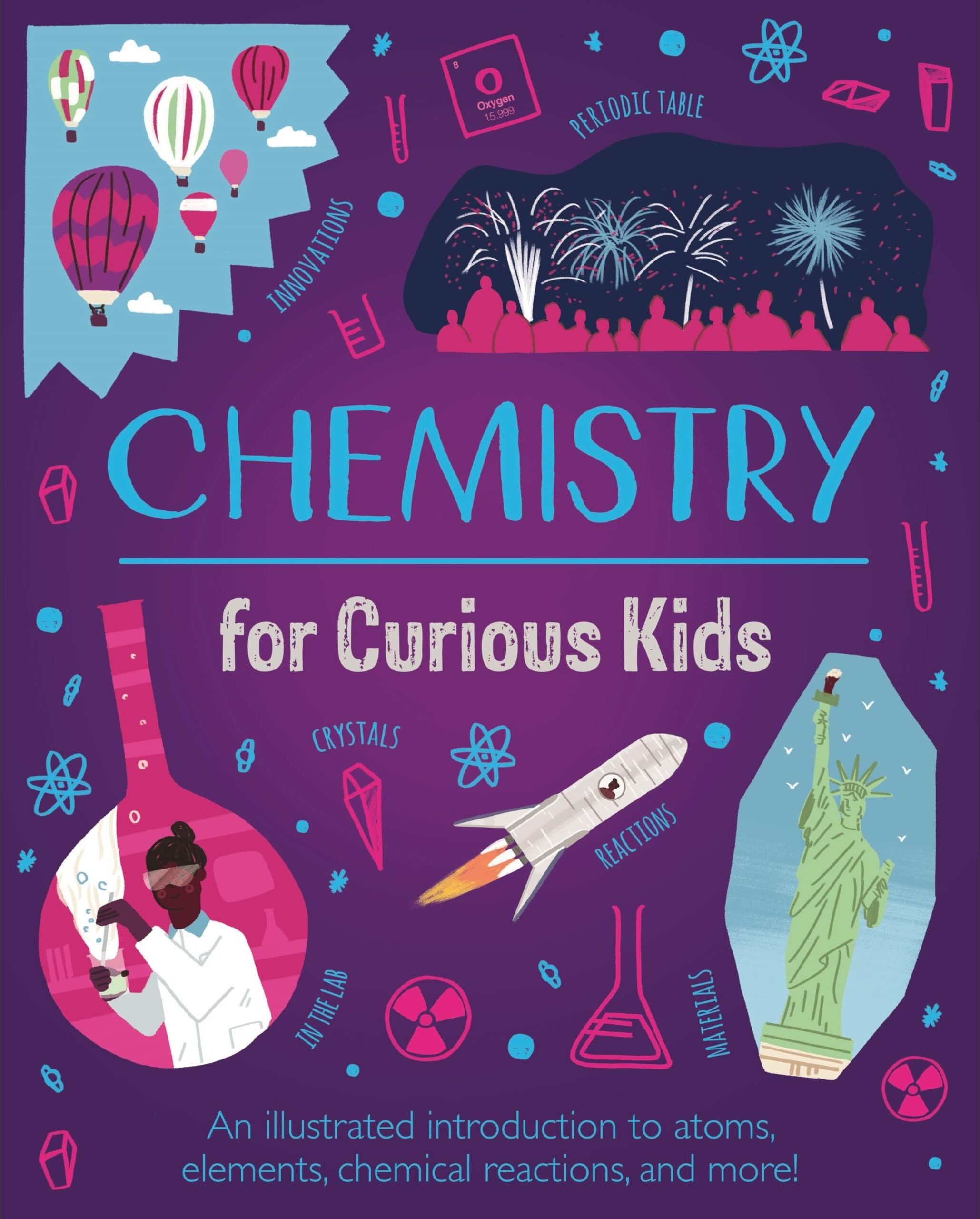
Arcturus Chemistry for Curious Kids: An Illustrated Introduction to Atoms, Elements, Chemical Reactions, and More! (Curious Kids, 2)Young readers can discover the wonders of chemistry with this accessible introduction, presented in a wonderful jacketed hardback format with full-colour illustrations. This inspirational book is packed with clear and engaging explanations of this fundamental topic, accompanied by beautiful illustrations by Alex Foster. Supporting STEM learning, this book is an ideal supplement to school education as it covers many core chemistry topics in an entertaining and easy-to-understand way. Big new concepts pop off the page thanks to vibrant diagrams and an engaging, energetic text. Kids will relish sharing them with friends and family! Young readers will love exploring exhilarating new ideas about: • Elements • Compounds • Molecules • Atoms • And much more! A great gift for readers aged 8-12.7,89 £*Shipping: 2,99 £Secure redirect to the provider
-
Sesderma Reti Age 5 Liposomal Serum Anti-Aging Innovation 30mLA facial serum for wrinkles and signs of ageing. Reduces wrinkles and fine lines. Hydrates and strengthens barrier. Restores youthful radiance. 5-Retinoid System: smooths wrinkles, accelerates renewal, and boosts collagen. Biomimetic Peptides: fill expression lines by stimulating collagen synthesis.53,26 £*Shipping: 5,22 £Secure redirect to the provider
-
HARPERCOLLINS Creative Confidence by Tom & David Kelley – Unleashing Your Creative Potential & Innovation MindsetA powerful and inspiring book from the founders of IDEO, the award-winning design firm, on unleashing the creativity that lies within each and every one of us. Too often, companies and individuals assume that creativity and innovation are the domain of the ‘creative types’. But two of the foremost experts in innovation, design and creativity on the planet show us that each and every one of us is creative. In an entertaining and inspiring narrative that draws on countless stories from their work at IDEO, and with many of the world's top companies and design firms, David and Tom Kelley identify the principles and strategies that will allow us to tap into our creative potential in our work lives, and in our personal lives, allow us to think outside the box in terms of how we approach and solve problems. ‘Creative Confidence’ is a book that will help each of us be more productive and successful in our lives and in our careers.4,95 £*Shipping: 1,99 £Secure redirect to the provider
-
Innovation: Fourth Edition Board Game - 2-4 Players - New Edition with Age 11 CardsStrategic card game for 2 to 4 players. Build a civilization through ideas, inventions, and cultural advances. Includes updated artwork, streamlined rules, and new expansion The Unseen.17,59 £*Shipping: 3,95 £Secure redirect to the provider
-
What are oxygen atoms and carbon atoms?
Oxygen atoms are the building blocks of the element oxygen, which is essential for life and makes up a large portion of the Earth's atmosphere. Oxygen atoms have 8 protons and typically 8 neutrons, giving them a total atomic mass of 16. They are known for their ability to form strong bonds with other elements, making them crucial for the formation of molecules such as water and carbon dioxide. Carbon atoms are the building blocks of the element carbon, which is a fundamental component of all known life on Earth. Carbon atoms have 6 protons and typically 6 neutrons, giving them a total atomic mass of 12. They are known for their ability to form long chains and complex structures, making them essential for the formation of organic molecules such as proteins, carbohydrates, and DNA. **
-
Will adding protons to atoms create different atoms?
No, adding protons to atoms will not create different atoms. The number of protons in an atom determines its identity as a specific element. Adding protons to an atom will change its identity and create a different element. However, adding protons to an atom can create a different isotope of the same element, which will have a different atomic mass but the same chemical properties. **
-
Why are some atoms larger than other atoms?
Some atoms are larger than others because they have more protons, neutrons, and electrons, which increases their atomic mass and size. The number of electron shells and the distance of the outermost electrons from the nucleus also contribute to the size of an atom. Additionally, the arrangement of electrons in the electron shells can affect the size of an atom. Overall, the size of an atom is determined by a combination of its atomic number, electron configuration, and atomic mass. **
-
Do argon atoms form when chlorine atoms gain electrons?
No, argon atoms do not form when chlorine atoms gain electrons. When chlorine atoms gain an electron, they become chloride ions with a negative charge. Argon is a noble gas and already has a full outer electron shell, so it does not need to gain or lose electrons to achieve stability. **
Similar search terms for Atoms
-
Travelite Venture Line Travel backpack beigeDesigned for dynamic travel, this Travelite Venture Line backpack combines functionality with urban style. Crafted from coated nylon with a synthetic lining, it offers durability and a sleek finish. The bag features breathable padded backpack straps with a sternum strap and compression strap for added stability and comfort. It closes securely with a two-way zipper and includes a detachable, padded, and adjustable shoulder strap for versatile carrying. Organise your essentials easily with one main compartment, front and side zip pockets, and two slip pockets. With two handles and a retractable backpack strap, it’s perfect for men and women on the move, offering ample space for everyday adventures.79,00 £*Shipping: 0,00 £Secure redirect to the provider
-
Victorinox Swiss Army Knife Venture BlackThe Victorinox Swiss Army Knife Venture Black is a fixed-blade bushcraft knife that stands out in its category. Designed by outdoor experts, this dependable tool easily handles various challenges. The Venture features a drop-point blade for precise carving and a sharp 90° spine that simplifies fire-making. Additionally, it comes with a protective sheath that doubles as a blow tube for quick fire ignition. The Swiss-made fixed blade is crafted from high-quality steel, while the non-slip handle includes a protruding tang and a hex hole for added functionality. Features: Blade, 10.5cm / Fire making blowtube / Hex hole / Lanyard hole / Protruding tang. Dimensions: 2.8(H) x 23.3(L) x 4.2(W) cm. Weight: 0.152kg. The Victorinox Swiss Army Knife Venture Black is covered by a Victorinox lifetime warranty. Knives are not for sale to persons under the age of 18. - all knives and bladed products are delivered by Age Verified Delivery (AVD). The carrier may request proof of age in order to deliver your parcel. If proof of age is not available, or the recipient is underage, the carrier will refuse to deliver.74,95 £*Shipping: 0,00 £Secure redirect to the provider
-
Victorinox Swiss Army Knife Venture RedThe Victorinox Swiss Army Knife Venture is a fixed-blade bushcraft knife that stands out in its category. Designed by outdoor experts, this dependable tool easily handles various challenges. The Venture features a drop-point blade for precise carving and a sharp 90° spine that simplifies fire-making. Additionally, it comes with a protective sheath that doubles as a blow tube for quick fire ignition. The Swiss-made fixed blade is crafted from high-quality steel, while the non-slip handle includes a protruding tang and a hex hole for added functionality. Features: Blade, 10.5cm / Fire making blowtube / Hex hole / Lanyard hole / Protruding tang. Dimensions: 2.8(H) x 23.3(L) x 4.2(W) cm. Weight: 0.152kg. The Victorinox Swiss Army Knife Venture is covered by a Victorinox lifetime warranty. Knives are not for sale to persons under the age of 18. - all knives and bladed products are delivered by Age Verified Delivery (AVD). The carrier may request proof of age in order to deliver your parcel. If proof of age is not available, or the recipient is underage, the carrier will refuse to deliver.74,95 £*Shipping: 0,00 £Secure redirect to the provider
-
Are atoms universes?
No, atoms are not universes. Atoms are the basic building blocks of matter, consisting of a nucleus of protons and neutrons surrounded by a cloud of electrons. Universes, on the other hand, are vast and complex systems that contain galaxies, stars, planets, and other celestial bodies. While both atoms and universes are part of the natural world, they exist at vastly different scales and levels of complexity. **
-
Can atoms explode?
Atoms themselves cannot explode, as they are the building blocks of matter and are stable in their natural state. However, when atoms undergo a nuclear reaction, such as nuclear fission or fusion, a large amount of energy is released in the form of an explosion. This is what happens in nuclear bombs or nuclear power plants. So, while atoms themselves cannot explode, the reactions they undergo can result in explosive energy release. **
-
What is the difference between metal atoms and magnesium atoms?
Metal atoms refer to a broad category of elements that exhibit metallic properties, such as being good conductors of heat and electricity. Magnesium atoms, on the other hand, specifically refer to atoms of the element magnesium, which is a metal known for its light weight and high strength-to-weight ratio. While magnesium atoms are a subset of metal atoms, they have unique properties and characteristics that distinguish them from other metals. **
-
Can all atoms be split or only atoms that are radioactive?
Only atoms that are radioactive can be split through a process called nuclear fission. This process involves splitting the nucleus of an atom into smaller parts, releasing a large amount of energy in the process. Not all atoms are radioactive, so only those specific atoms can undergo nuclear fission. **
* All prices are inclusive of VAT and, if applicable, plus shipping costs. The offer information is based on the details provided by the respective shop and is updated through automated processes. Real-time updates do not occur, so deviations can occur in individual cases. ** Note: Parts of this content were created by AI.