Buy startup.co.at ?
We are moving the project
startup.co.at .
Are you interested in purchasing the domain
startup.co.at ?
domain@kv-gmbh.de · 0541-91531010
Buy startup.co.at ?
What is depreciation?
Depreciation is the decrease in value of an asset over time due to wear and tear, obsolescence, or other factors. It is a method used in accounting to allocate the cost of an asset over its useful life. By recognizing depreciation expenses, a company can accurately reflect the decrease in value of its assets on its financial statements. Depreciation is important for businesses to properly account for the decrease in value of their assets and to accurately report their financial performance. **
What is the difference between calculated depreciation and accounting depreciation?
Calculated depreciation refers to the estimated reduction in the value of an asset over time, typically based on its useful life and salvage value. Accounting depreciation, on the other hand, is the systematic allocation of the cost of an asset to its useful life in the company's financial statements, following specific accounting rules and standards. While calculated depreciation is more of an estimation, accounting depreciation is a formal recognition of the reduction in the asset's value on the company's books. **


Similar search terms for Depreciation
Top-Angebote
Products related to Depreciation:
-
Innovation: Fourth Edition Board Game - 2-4 Players - New Edition with Age 11 CardsStrategic card game for 2 to 4 players. Build a civilization through ideas, inventions, and cultural advances. Includes updated artwork, streamlined rules, and new expansion The Unseen.17,59 £*Shipping: 3,95 £Secure redirect to the provider
-
Travelite Venture Line Travel backpack beigeDesigned for dynamic travel, this Travelite Venture Line backpack combines functionality with urban style. Crafted from coated nylon with a synthetic lining, it offers durability and a sleek finish. The bag features breathable padded backpack straps with a sternum strap and compression strap for added stability and comfort. It closes securely with a two-way zipper and includes a detachable, padded, and adjustable shoulder strap for versatile carrying. Organise your essentials easily with one main compartment, front and side zip pockets, and two slip pockets. With two handles and a retractable backpack strap, it’s perfect for men and women on the move, offering ample space for everyday adventures.79,00 £*Shipping: 0,00 £Secure redirect to the provider
-
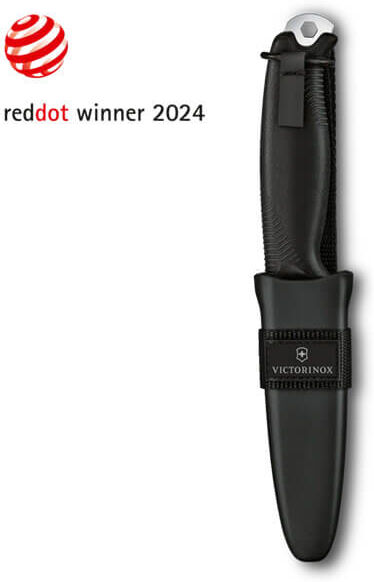
Victorinox Swiss Army Knife Venture BlackThe Victorinox Swiss Army Knife Venture Black is a fixed-blade bushcraft knife that stands out in its category. Designed by outdoor experts, this dependable tool easily handles various challenges. The Venture features a drop-point blade for precise carving and a sharp 90° spine that simplifies fire-making. Additionally, it comes with a protective sheath that doubles as a blow tube for quick fire ignition. The Swiss-made fixed blade is crafted from high-quality steel, while the non-slip handle includes a protruding tang and a hex hole for added functionality. Features: Blade, 10.5cm / Fire making blowtube / Hex hole / Lanyard hole / Protruding tang. Dimensions: 2.8(H) x 23.3(L) x 4.2(W) cm. Weight: 0.152kg. The Victorinox Swiss Army Knife Venture Black is covered by a Victorinox lifetime warranty. Knives are not for sale to persons under the age of 18. - all knives and bladed products are delivered by Age Verified Delivery (AVD). The carrier may request proof of age in order to deliver your parcel. If proof of age is not available, or the recipient is underage, the carrier will refuse to deliver.74,95 £*Shipping: 0,00 £Secure redirect to the provider


-
Why is the calculated depreciation lower than the accounting depreciation?
The calculated depreciation is often lower than the accounting depreciation because it is based on the asset's useful life and salvage value, while accounting depreciation may include additional factors such as tax regulations or management's discretion. Calculated depreciation follows a systematic method like straight-line or reducing balance, whereas accounting depreciation can be influenced by various accounting policies or methods chosen by the company. Additionally, accounting depreciation may consider impairment charges or revaluation of assets, leading to differences in the calculated and accounting depreciation figures. **
-
What are accumulated depreciation?
Accumulated depreciation is the total amount of depreciation expense that has been recorded for a fixed asset since it was acquired. It represents the total decrease in the value of the asset over time due to wear and tear, obsolescence, or other factors. Accumulated depreciation is a contra-asset account, meaning it is subtracted from the original cost of the asset to determine its net book value on the balance sheet. It is important for accurately reflecting the true value of the asset and for calculating depreciation expense for future periods. **
-
How to calculate the depreciation of a car through straight-line depreciation?
To calculate the depreciation of a car through straight-line depreciation, you first need to determine the initial cost of the car, including any additional costs like taxes or registration fees. Next, estimate the salvage value of the car at the end of its useful life. Then, subtract the salvage value from the initial cost to find the depreciable cost. Finally, divide the depreciable cost by the number of years in the car's useful life to determine the annual depreciation expense. **
-
What is depreciation and what is meant by a declining balance depreciation?
Depreciation is the gradual decrease in the value of an asset over time due to wear and tear, obsolescence, or other factors. Declining balance depreciation is a method of calculating depreciation where the asset's value decreases by a fixed percentage each year. This method typically results in higher depreciation expenses in the earlier years of an asset's life and lower expenses in later years. **


How do you calculate the depreciation of a car through straight-line depreciation?
To calculate the depreciation of a car through straight-line depreciation, you would first determine the initial cost of the car. Then, you would subtract the car's estimated salvage value (the amount you expect to sell the car for at the end of its useful life) from the initial cost to find the depreciable cost. Next, you would divide the depreciable cost by the number of years in the car's useful life to find the annual depreciation expense. This annual depreciation expense would be the same for each year of the car's useful life, hence the term "straight-line" depreciation. **
Why is the calculated depreciation lower than the depreciation in the balance sheet?
The calculated depreciation is based on the estimated useful life of the asset and the method used for depreciation, such as straight-line or reducing balance method. It may be lower than the depreciation in the balance sheet if the company has chosen a more conservative approach to depreciation in their financial statements to account for potential fluctuations in the asset's value or to comply with accounting standards. Additionally, the company may have made adjustments for impairment or changes in the asset's useful life that are not reflected in the calculated depreciation. **
Top-Angebote
Products related to Depreciation:
-
Sesderma Reti Age 5 Liposomal Serum Anti-Aging Innovation 30mLA facial serum for wrinkles and signs of ageing. Reduces wrinkles and fine lines. Hydrates and strengthens barrier. Restores youthful radiance. 5-Retinoid System: smooths wrinkles, accelerates renewal, and boosts collagen. Biomimetic Peptides: fill expression lines by stimulating collagen synthesis.53,26 £*Shipping: 5,22 £Secure redirect to the provider
-
HARPERCOLLINS Creative Confidence by Tom & David Kelley – Unleashing Your Creative Potential & Innovation MindsetA powerful and inspiring book from the founders of IDEO, the award-winning design firm, on unleashing the creativity that lies within each and every one of us. Too often, companies and individuals assume that creativity and innovation are the domain of the ‘creative types’. But two of the foremost experts in innovation, design and creativity on the planet show us that each and every one of us is creative. In an entertaining and inspiring narrative that draws on countless stories from their work at IDEO, and with many of the world's top companies and design firms, David and Tom Kelley identify the principles and strategies that will allow us to tap into our creative potential in our work lives, and in our personal lives, allow us to think outside the box in terms of how we approach and solve problems. ‘Creative Confidence’ is a book that will help each of us be more productive and successful in our lives and in our careers.4,95 £*Shipping: 1,99 £Secure redirect to the provider
-
Innovation: Fourth Edition Board Game - 2-4 Players - New Edition with Age 11 CardsStrategic card game for 2 to 4 players. Build a civilization through ideas, inventions, and cultural advances. Includes updated artwork, streamlined rules, and new expansion The Unseen.17,59 £*Shipping: 3,95 £Secure redirect to the provider
-
What is depreciation?
Depreciation is the decrease in value of an asset over time due to wear and tear, obsolescence, or other factors. It is a method used in accounting to allocate the cost of an asset over its useful life. By recognizing depreciation expenses, a company can accurately reflect the decrease in value of its assets on its financial statements. Depreciation is important for businesses to properly account for the decrease in value of their assets and to accurately report their financial performance. **
-
What is the difference between calculated depreciation and accounting depreciation?
Calculated depreciation refers to the estimated reduction in the value of an asset over time, typically based on its useful life and salvage value. Accounting depreciation, on the other hand, is the systematic allocation of the cost of an asset to its useful life in the company's financial statements, following specific accounting rules and standards. While calculated depreciation is more of an estimation, accounting depreciation is a formal recognition of the reduction in the asset's value on the company's books. **
-
Why is the calculated depreciation lower than the accounting depreciation?
The calculated depreciation is often lower than the accounting depreciation because it is based on the asset's useful life and salvage value, while accounting depreciation may include additional factors such as tax regulations or management's discretion. Calculated depreciation follows a systematic method like straight-line or reducing balance, whereas accounting depreciation can be influenced by various accounting policies or methods chosen by the company. Additionally, accounting depreciation may consider impairment charges or revaluation of assets, leading to differences in the calculated and accounting depreciation figures. **
-
What are accumulated depreciation?
Accumulated depreciation is the total amount of depreciation expense that has been recorded for a fixed asset since it was acquired. It represents the total decrease in the value of the asset over time due to wear and tear, obsolescence, or other factors. Accumulated depreciation is a contra-asset account, meaning it is subtracted from the original cost of the asset to determine its net book value on the balance sheet. It is important for accurately reflecting the true value of the asset and for calculating depreciation expense for future periods. **
Similar search terms for Depreciation
-
Travelite Venture Line Travel backpack beigeDesigned for dynamic travel, this Travelite Venture Line backpack combines functionality with urban style. Crafted from coated nylon with a synthetic lining, it offers durability and a sleek finish. The bag features breathable padded backpack straps with a sternum strap and compression strap for added stability and comfort. It closes securely with a two-way zipper and includes a detachable, padded, and adjustable shoulder strap for versatile carrying. Organise your essentials easily with one main compartment, front and side zip pockets, and two slip pockets. With two handles and a retractable backpack strap, it’s perfect for men and women on the move, offering ample space for everyday adventures.79,00 £*Shipping: 0,00 £Secure redirect to the provider
-
Victorinox Swiss Army Knife Venture BlackThe Victorinox Swiss Army Knife Venture Black is a fixed-blade bushcraft knife that stands out in its category. Designed by outdoor experts, this dependable tool easily handles various challenges. The Venture features a drop-point blade for precise carving and a sharp 90° spine that simplifies fire-making. Additionally, it comes with a protective sheath that doubles as a blow tube for quick fire ignition. The Swiss-made fixed blade is crafted from high-quality steel, while the non-slip handle includes a protruding tang and a hex hole for added functionality. Features: Blade, 10.5cm / Fire making blowtube / Hex hole / Lanyard hole / Protruding tang. Dimensions: 2.8(H) x 23.3(L) x 4.2(W) cm. Weight: 0.152kg. The Victorinox Swiss Army Knife Venture Black is covered by a Victorinox lifetime warranty. Knives are not for sale to persons under the age of 18. - all knives and bladed products are delivered by Age Verified Delivery (AVD). The carrier may request proof of age in order to deliver your parcel. If proof of age is not available, or the recipient is underage, the carrier will refuse to deliver.74,95 £*Shipping: 0,00 £Secure redirect to the provider
-
Victorinox Swiss Army Knife Venture RedThe Victorinox Swiss Army Knife Venture is a fixed-blade bushcraft knife that stands out in its category. Designed by outdoor experts, this dependable tool easily handles various challenges. The Venture features a drop-point blade for precise carving and a sharp 90° spine that simplifies fire-making. Additionally, it comes with a protective sheath that doubles as a blow tube for quick fire ignition. The Swiss-made fixed blade is crafted from high-quality steel, while the non-slip handle includes a protruding tang and a hex hole for added functionality. Features: Blade, 10.5cm / Fire making blowtube / Hex hole / Lanyard hole / Protruding tang. Dimensions: 2.8(H) x 23.3(L) x 4.2(W) cm. Weight: 0.152kg. The Victorinox Swiss Army Knife Venture is covered by a Victorinox lifetime warranty. Knives are not for sale to persons under the age of 18. - all knives and bladed products are delivered by Age Verified Delivery (AVD). The carrier may request proof of age in order to deliver your parcel. If proof of age is not available, or the recipient is underage, the carrier will refuse to deliver.74,95 £*Shipping: 0,00 £Secure redirect to the provider
-
How to calculate the depreciation of a car through straight-line depreciation?
To calculate the depreciation of a car through straight-line depreciation, you first need to determine the initial cost of the car, including any additional costs like taxes or registration fees. Next, estimate the salvage value of the car at the end of its useful life. Then, subtract the salvage value from the initial cost to find the depreciable cost. Finally, divide the depreciable cost by the number of years in the car's useful life to determine the annual depreciation expense. **
-
What is depreciation and what is meant by a declining balance depreciation?
Depreciation is the gradual decrease in the value of an asset over time due to wear and tear, obsolescence, or other factors. Declining balance depreciation is a method of calculating depreciation where the asset's value decreases by a fixed percentage each year. This method typically results in higher depreciation expenses in the earlier years of an asset's life and lower expenses in later years. **
-
How do you calculate the depreciation of a car through straight-line depreciation?
To calculate the depreciation of a car through straight-line depreciation, you would first determine the initial cost of the car. Then, you would subtract the car's estimated salvage value (the amount you expect to sell the car for at the end of its useful life) from the initial cost to find the depreciable cost. Next, you would divide the depreciable cost by the number of years in the car's useful life to find the annual depreciation expense. This annual depreciation expense would be the same for each year of the car's useful life, hence the term "straight-line" depreciation. **
-
Why is the calculated depreciation lower than the depreciation in the balance sheet?
The calculated depreciation is based on the estimated useful life of the asset and the method used for depreciation, such as straight-line or reducing balance method. It may be lower than the depreciation in the balance sheet if the company has chosen a more conservative approach to depreciation in their financial statements to account for potential fluctuations in the asset's value or to comply with accounting standards. Additionally, the company may have made adjustments for impairment or changes in the asset's useful life that are not reflected in the calculated depreciation. **
* All prices are inclusive of VAT and, if applicable, plus shipping costs. The offer information is based on the details provided by the respective shop and is updated through automated processes. Real-time updates do not occur, so deviations can occur in individual cases. ** Note: Parts of this content were created by AI.