Buy startup.co.at ?
We are moving the project
startup.co.at .
Are you interested in purchasing the domain
startup.co.at ?
domain@kv-gmbh.de · 0541-91531010
Buy startup.co.at ?
Is water electrophilic or nucleophilic?
Water is considered nucleophilic because it has a lone pair of electrons on the oxygen atom, which can be donated to an electrophile in a chemical reaction. This lone pair of electrons allows water to act as a nucleophile, meaning it can attack positively charged or electron-deficient species in a chemical reaction. **
What is a nucleophilic substitution?
A nucleophilic substitution is a type of organic reaction where a nucleophile replaces a leaving group in a molecule. The nucleophile is an electron-rich species that attacks the electrophilic carbon atom, leading to the displacement of the leaving group. This reaction is commonly seen in alkyl halides, where the halogen atom is replaced by a nucleophile such as hydroxide or amine. Nucleophilic substitutions can proceed via either an SN1 (unimolecular) or SN2 (bimolecular) mechanism, depending on the structure of the substrate and reaction conditions. **


Similar search terms for Nucleophilic
Top-Angebote
Products related to Nucleophilic:
-
Innovation: Fourth Edition Board Game - 2-4 Players - New Edition with Age 11 CardsStrategic card game for 2 to 4 players. Build a civilization through ideas, inventions, and cultural advances. Includes updated artwork, streamlined rules, and new expansion The Unseen.17,59 £*Shipping: 3,95 £Secure redirect to the provider
-
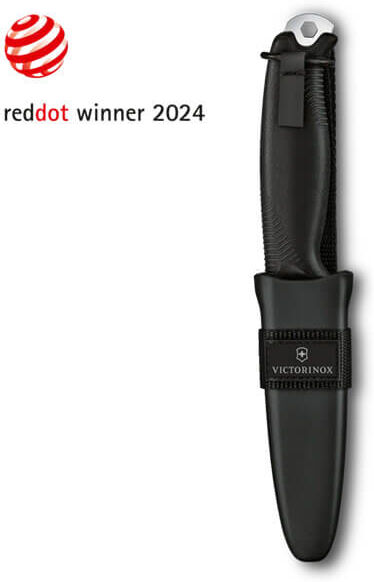
Victorinox Swiss Army Knife Venture BlackThe Victorinox Swiss Army Knife Venture Black is a fixed-blade bushcraft knife that stands out in its category. Designed by outdoor experts, this dependable tool easily handles various challenges. The Venture features a drop-point blade for precise carving and a sharp 90° spine that simplifies fire-making. Additionally, it comes with a protective sheath that doubles as a blow tube for quick fire ignition. The Swiss-made fixed blade is crafted from high-quality steel, while the non-slip handle includes a protruding tang and a hex hole for added functionality. Features: Blade, 10.5cm / Fire making blowtube / Hex hole / Lanyard hole / Protruding tang. Dimensions: 2.8(H) x 23.3(L) x 4.2(W) cm. Weight: 0.152kg. The Victorinox Swiss Army Knife Venture Black is covered by a Victorinox lifetime warranty. Knives are not for sale to persons under the age of 18. - all knives and bladed products are delivered by Age Verified Delivery (AVD). The carrier may request proof of age in order to deliver your parcel. If proof of age is not available, or the recipient is underage, the carrier will refuse to deliver.74,95 £*Shipping: 0,00 £Secure redirect to the provider
-
Victorinox Swiss Army Knife Venture RedThe Victorinox Swiss Army Knife Venture is a fixed-blade bushcraft knife that stands out in its category. Designed by outdoor experts, this dependable tool easily handles various challenges. The Venture features a drop-point blade for precise carving and a sharp 90° spine that simplifies fire-making. Additionally, it comes with a protective sheath that doubles as a blow tube for quick fire ignition. The Swiss-made fixed blade is crafted from high-quality steel, while the non-slip handle includes a protruding tang and a hex hole for added functionality. Features: Blade, 10.5cm / Fire making blowtube / Hex hole / Lanyard hole / Protruding tang. Dimensions: 2.8(H) x 23.3(L) x 4.2(W) cm. Weight: 0.152kg. The Victorinox Swiss Army Knife Venture is covered by a Victorinox lifetime warranty. Knives are not for sale to persons under the age of 18. - all knives and bladed products are delivered by Age Verified Delivery (AVD). The carrier may request proof of age in order to deliver your parcel. If proof of age is not available, or the recipient is underage, the carrier will refuse to deliver.74,95 £*Shipping: 0,00 £Secure redirect to the provider



-
What is a nucleophilic center?
A nucleophilic center is an atom within a molecule that has a partial or full negative charge and is therefore attracted to positively charged species. This center is rich in electrons and is capable of donating a pair of electrons to form a new chemical bond with an electrophile. Nucleophilic centers are commonly found in atoms such as oxygen, nitrogen, and sulfur, which have lone pairs of electrons available for bonding. These centers play a key role in many chemical reactions, such as nucleophilic substitution and addition reactions. **
-
How does a nucleophilic substitution proceed?
A nucleophilic substitution proceeds with the attack of a nucleophile on an electrophilic carbon atom, leading to the displacement of a leaving group. The nucleophile, which is typically a negatively charged or electron-rich species, attacks the electrophilic carbon, forming a new bond and causing the leaving group to depart. This results in the substitution of the leaving group with the nucleophile, leading to the formation of a new compound. The rate and mechanism of the nucleophilic substitution can be influenced by factors such as the nature of the nucleophile, leaving group, and solvent. **
-
What are nucleophilic and electrophilic reagents?
Nucleophilic reagents are molecules or ions that are electron-rich and are attracted to electron-deficient sites in other molecules. They donate a pair of electrons to form a new covalent bond. Electrophilic reagents, on the other hand, are electron-deficient species that are attracted to electron-rich sites in other molecules. They accept a pair of electrons to form a new covalent bond. Both types of reagents play important roles in organic chemistry reactions by participating in bond formation processes. **
-
What is the Walden inversion in nucleophilic substitution?
The Walden inversion in nucleophilic substitution refers to the stereochemical outcome where the configuration of the stereocenter is inverted during the reaction. This inversion occurs due to the backside attack of the nucleophile on the electrophilic center, leading to the formation of the inverted product. The Walden inversion is a key concept in understanding the mechanism of nucleophilic substitution reactions, particularly in reactions involving chiral centers. **


What is a nucleophilic substitution of the first order?
A nucleophilic substitution of the first order is a type of chemical reaction in which a nucleophile replaces a leaving group in a molecule. This reaction follows first-order kinetics, meaning that the rate of the reaction is directly proportional to the concentration of the substrate. The reaction proceeds through a transition state in which the nucleophile attacks the substrate, leading to the formation of a new product. Nucleophilic substitutions of the first order are commonly seen in organic chemistry, particularly in reactions involving alkyl halides. **
Is ethanol an acid or base in nucleophilic substitution?
Ethanol is neither an acid nor a base in nucleophilic substitution. In a nucleophilic substitution reaction, ethanol can act as a solvent or a nucleophile, depending on the specific reaction conditions. As a solvent, ethanol can dissolve the reactants and facilitate the reaction, while as a nucleophile, it can donate a pair of electrons to attack an electrophilic center in the substrate molecule. Therefore, the role of ethanol in nucleophilic substitution reactions depends on the specific reaction conditions and the nature of the reactants involved. **
Top-Angebote
Products related to Nucleophilic:
-
Sesderma Reti Age 5 Liposomal Serum Anti-Aging Innovation 30mLA facial serum for wrinkles and signs of ageing. Reduces wrinkles and fine lines. Hydrates and strengthens barrier. Restores youthful radiance. 5-Retinoid System: smooths wrinkles, accelerates renewal, and boosts collagen. Biomimetic Peptides: fill expression lines by stimulating collagen synthesis.53,26 £*Shipping: 5,22 £Secure redirect to the provider
-
HARPERCOLLINS Creative Confidence by Tom & David Kelley – Unleashing Your Creative Potential & Innovation MindsetA powerful and inspiring book from the founders of IDEO, the award-winning design firm, on unleashing the creativity that lies within each and every one of us. Too often, companies and individuals assume that creativity and innovation are the domain of the ‘creative types’. But two of the foremost experts in innovation, design and creativity on the planet show us that each and every one of us is creative. In an entertaining and inspiring narrative that draws on countless stories from their work at IDEO, and with many of the world's top companies and design firms, David and Tom Kelley identify the principles and strategies that will allow us to tap into our creative potential in our work lives, and in our personal lives, allow us to think outside the box in terms of how we approach and solve problems. ‘Creative Confidence’ is a book that will help each of us be more productive and successful in our lives and in our careers.4,95 £*Shipping: 1,99 £Secure redirect to the provider
-
Innovation: Fourth Edition Board Game - 2-4 Players - New Edition with Age 11 CardsStrategic card game for 2 to 4 players. Build a civilization through ideas, inventions, and cultural advances. Includes updated artwork, streamlined rules, and new expansion The Unseen.17,59 £*Shipping: 3,95 £Secure redirect to the provider
-
Victorinox Swiss Army Knife Venture BlackThe Victorinox Swiss Army Knife Venture Black is a fixed-blade bushcraft knife that stands out in its category. Designed by outdoor experts, this dependable tool easily handles various challenges. The Venture features a drop-point blade for precise carving and a sharp 90° spine that simplifies fire-making. Additionally, it comes with a protective sheath that doubles as a blow tube for quick fire ignition. The Swiss-made fixed blade is crafted from high-quality steel, while the non-slip handle includes a protruding tang and a hex hole for added functionality. Features: Blade, 10.5cm / Fire making blowtube / Hex hole / Lanyard hole / Protruding tang. Dimensions: 2.8(H) x 23.3(L) x 4.2(W) cm. Weight: 0.152kg. The Victorinox Swiss Army Knife Venture Black is covered by a Victorinox lifetime warranty. Knives are not for sale to persons under the age of 18. - all knives and bladed products are delivered by Age Verified Delivery (AVD). The carrier may request proof of age in order to deliver your parcel. If proof of age is not available, or the recipient is underage, the carrier will refuse to deliver.74,95 £*Shipping: 0,00 £Secure redirect to the provider
-
Is water electrophilic or nucleophilic?
Water is considered nucleophilic because it has a lone pair of electrons on the oxygen atom, which can be donated to an electrophile in a chemical reaction. This lone pair of electrons allows water to act as a nucleophile, meaning it can attack positively charged or electron-deficient species in a chemical reaction. **
-
What is a nucleophilic substitution?
A nucleophilic substitution is a type of organic reaction where a nucleophile replaces a leaving group in a molecule. The nucleophile is an electron-rich species that attacks the electrophilic carbon atom, leading to the displacement of the leaving group. This reaction is commonly seen in alkyl halides, where the halogen atom is replaced by a nucleophile such as hydroxide or amine. Nucleophilic substitutions can proceed via either an SN1 (unimolecular) or SN2 (bimolecular) mechanism, depending on the structure of the substrate and reaction conditions. **
-
What is a nucleophilic center?
A nucleophilic center is an atom within a molecule that has a partial or full negative charge and is therefore attracted to positively charged species. This center is rich in electrons and is capable of donating a pair of electrons to form a new chemical bond with an electrophile. Nucleophilic centers are commonly found in atoms such as oxygen, nitrogen, and sulfur, which have lone pairs of electrons available for bonding. These centers play a key role in many chemical reactions, such as nucleophilic substitution and addition reactions. **
-
How does a nucleophilic substitution proceed?
A nucleophilic substitution proceeds with the attack of a nucleophile on an electrophilic carbon atom, leading to the displacement of a leaving group. The nucleophile, which is typically a negatively charged or electron-rich species, attacks the electrophilic carbon, forming a new bond and causing the leaving group to depart. This results in the substitution of the leaving group with the nucleophile, leading to the formation of a new compound. The rate and mechanism of the nucleophilic substitution can be influenced by factors such as the nature of the nucleophile, leaving group, and solvent. **
Similar search terms for Nucleophilic
-
Victorinox Swiss Army Knife Venture RedThe Victorinox Swiss Army Knife Venture is a fixed-blade bushcraft knife that stands out in its category. Designed by outdoor experts, this dependable tool easily handles various challenges. The Venture features a drop-point blade for precise carving and a sharp 90° spine that simplifies fire-making. Additionally, it comes with a protective sheath that doubles as a blow tube for quick fire ignition. The Swiss-made fixed blade is crafted from high-quality steel, while the non-slip handle includes a protruding tang and a hex hole for added functionality. Features: Blade, 10.5cm / Fire making blowtube / Hex hole / Lanyard hole / Protruding tang. Dimensions: 2.8(H) x 23.3(L) x 4.2(W) cm. Weight: 0.152kg. The Victorinox Swiss Army Knife Venture is covered by a Victorinox lifetime warranty. Knives are not for sale to persons under the age of 18. - all knives and bladed products are delivered by Age Verified Delivery (AVD). The carrier may request proof of age in order to deliver your parcel. If proof of age is not available, or the recipient is underage, the carrier will refuse to deliver.74,95 £*Shipping: 0,00 £Secure redirect to the provider
-
What are nucleophilic and electrophilic reagents?
Nucleophilic reagents are molecules or ions that are electron-rich and are attracted to electron-deficient sites in other molecules. They donate a pair of electrons to form a new covalent bond. Electrophilic reagents, on the other hand, are electron-deficient species that are attracted to electron-rich sites in other molecules. They accept a pair of electrons to form a new covalent bond. Both types of reagents play important roles in organic chemistry reactions by participating in bond formation processes. **
-
What is the Walden inversion in nucleophilic substitution?
The Walden inversion in nucleophilic substitution refers to the stereochemical outcome where the configuration of the stereocenter is inverted during the reaction. This inversion occurs due to the backside attack of the nucleophile on the electrophilic center, leading to the formation of the inverted product. The Walden inversion is a key concept in understanding the mechanism of nucleophilic substitution reactions, particularly in reactions involving chiral centers. **
-
What is a nucleophilic substitution of the first order?
A nucleophilic substitution of the first order is a type of chemical reaction in which a nucleophile replaces a leaving group in a molecule. This reaction follows first-order kinetics, meaning that the rate of the reaction is directly proportional to the concentration of the substrate. The reaction proceeds through a transition state in which the nucleophile attacks the substrate, leading to the formation of a new product. Nucleophilic substitutions of the first order are commonly seen in organic chemistry, particularly in reactions involving alkyl halides. **
-
Is ethanol an acid or base in nucleophilic substitution?
Ethanol is neither an acid nor a base in nucleophilic substitution. In a nucleophilic substitution reaction, ethanol can act as a solvent or a nucleophile, depending on the specific reaction conditions. As a solvent, ethanol can dissolve the reactants and facilitate the reaction, while as a nucleophile, it can donate a pair of electrons to attack an electrophilic center in the substrate molecule. Therefore, the role of ethanol in nucleophilic substitution reactions depends on the specific reaction conditions and the nature of the reactants involved. **
* All prices are inclusive of VAT and, if applicable, plus shipping costs. The offer information is based on the details provided by the respective shop and is updated through automated processes. Real-time updates do not occur, so deviations can occur in individual cases. ** Note: Parts of this content were created by AI.